Kalash Valleys Guide: Bumburet, Rumbur and Birir

Pakistan Locals Team
19 July 2026 · 5 min read
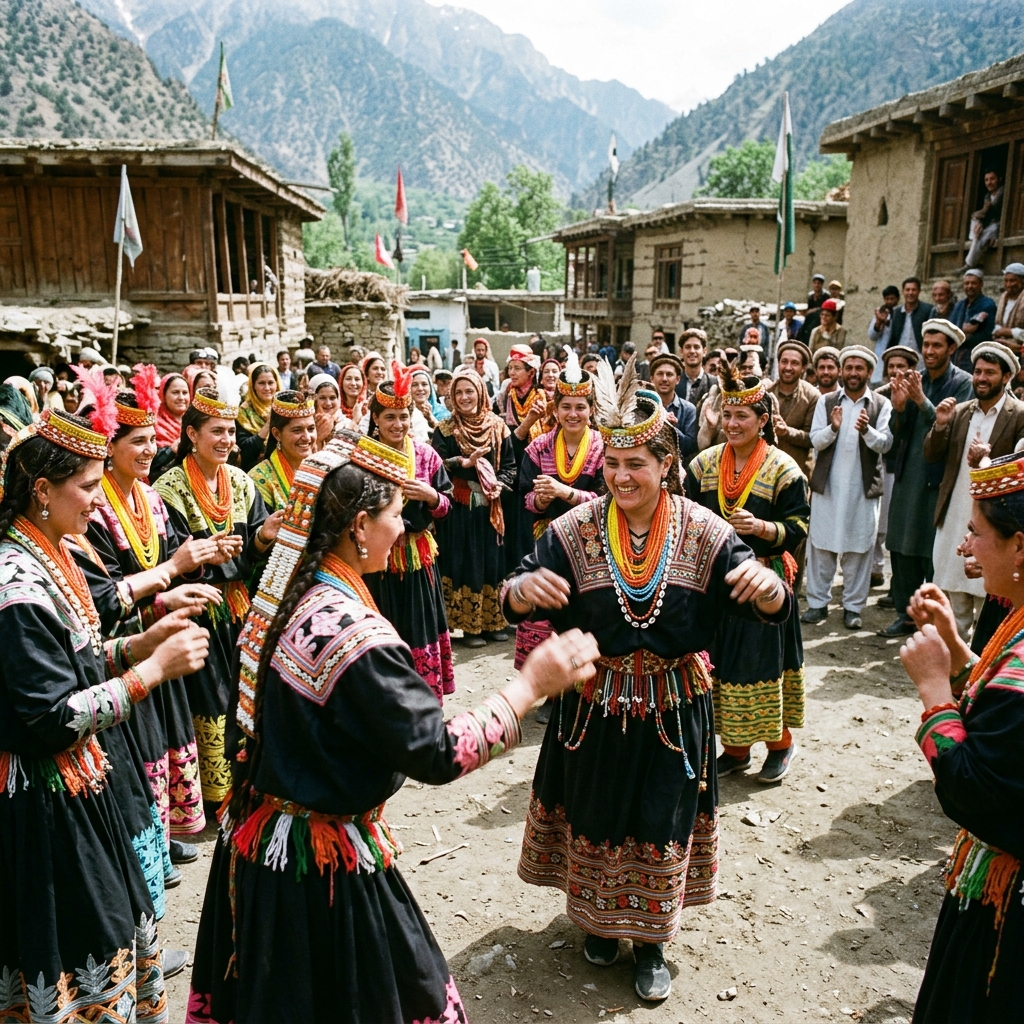
At a glance
- Location
- Kalash Valleys
- Region
- Khyber Pakhtunkhwa
- Best time
- May to September, ideally around Chilam Joshi in mid-May or Uchal in August
- Duration
- 2 to 4 days
- Altitude
- around 1,900 to 2,100 m
Tucked into the far corner of Chitral, close to the Afghan border, the three Kalash Valleys of Bumburet, Rumbur and Birir are home to the Kalash, a few thousand people who follow an ancient religion you will not find anywhere else in Pakistan. Their black-and-bead dress, their language, their music, their festivals, all of it is completely their own. This is one of the most extraordinary living cultures in the country, and it is fragile, so this guide is as much about visiting kindly as it is about logistics.
Who are the Kalash?
The Kalash are an indigenous community of only a few thousand people, and their polytheistic faith, oral traditions and festivals set them apart from every neighbour. The women wear a black woollen robe called a cheo, heavy with beaded necklaces and topped with a cowrie-shell headdress. The valleys are dotted with wooden shrines, temples and open spaces used for the festivals. Visiting the right way genuinely helps this culture survive, so it is worth doing thoughtfully.
Which valley to choose
- Bumburet. The biggest and easiest to reach, with the most guesthouses and the Kalasha Dur museum. This is where most people start, and the main festival hub.
- Rumbur. Quieter, with the most intact traditional life. Better if you want to slow down and stay a while.
- Birir. The smallest and most conservative, a bit lower down. Best if you have time and want a light footprint.
The festivals
The Kalash year turns on three festivals, and for a lot of visitors, timing the trip around one is the whole idea.
- Chilam Joshi (mid-May, around 13 to 17 May). The joyful spring festival that welcomes summer, full of dancing, flowers and courtship. It is the most visited and the easiest to catch.
- Uchal (August). A harvest festival of thanksgiving, tied to the fields, the walnuts and the grapes.
- Chaumos (December). The most sacred one, marking the winter solstice and the Kalash new year over several days. Deeply moving, but it means serious winter travel.
How to get there
First you get to Chitral. Either the short PIA flight from Islamabad (limited days and very weather-dependent), or a 10 to 12 hour drive from Islamabad or Peshawar via Dir and the 10.4 km Lowari Tunnel, which stays open all year. From Chitral town, hire a jeep for the 2 to 3 hour ride (32 to 36 km) up the gorge to whichever valley you have picked. Bumburet is usually the first stop.
When to go
May to September is the main season, warm days and cool nights, and it covers the two most accessible festivals, Chilam Joshi in May and Uchal in August. Spring is green and full of blossom, and late summer brings the harvest. Winter, for Chaumos, is beautiful but hard going, with the risk of Lowari delays on the way in.
Where to stay
You stay in Kalash-run guesthouses, which are family homes with guest rooms, mostly in Bumburet, plus a few simple hotels. Expect basic but warm comfort and a lot of home cooking. Staying and eating locally is the single best way to put money straight into the community. Book ahead for the May and August festivals, when the valleys fill right up.
Entry, registration and fees
Foreign visitors currently need no NOC for the Kalash valleys, just passport registration at the police checkpoints on the way in, and a small community entry fee collected at the valley gate that goes to Kalash cultural funds. The amounts change, so confirm on arrival and keep some cash handy.
How to be a good guest
This is a living community, not a museum, and that matters. Always ask before photographing people, especially women, and take a no gracefully. Dress modestly, ask before entering shrines or ceremonial areas (some are simply off-limits to outsiders), do not touch or buy ritual objects, and support the community by staying, eating and buying handicrafts locally. During festivals, watch respectfully and follow your host on where to stand. Thora sa adab, and you will be welcomed warmly.
Safety and practical tips
The valleys are welcoming and generally safe. The real hazards are the mountain roads and, in winter, the weather. Carry cash (no ATMs in the valleys), warm layers for cold nights even in summer, and a torch. Signal is patchy, so tell someone your plans. While you are in the area, it is easy to add Chitral town with its fort and Shahi Masjid, and the Garam Chashma hot springs.
This is one region where you can book real, local experiences right now. See what Chitrali hosts offer, from Kalash cultural stays to multi-day treks, on the Chitral page, or jump straight into Chitral trips and treks. Then plan the timing with our northern Pakistan season guide.
Written and fact-checked by the Pakistan Locals editorial team, with local hosts and guides who work with Kalash host families. Last updated August 2026. Festival dates and road conditions shift each year, so confirm before you travel and always ask before photographing people.
Sources and further reading
Ready to explore Pakistan with local hosts? Browse trips and experiences on Pakistan Locals, and if you live in the area you can list your own experience or stay. Read our Chitral valley travel guide and Shandur polo festival guide next.
Questions people ask
Do you need a permit for the Kalash valleys?+
No NOC is needed. You register your passport at the checkpoints and pay a small community entry fee at the valley gate.
When are the Kalash festivals?+
Chilam Joshi in mid May, Uchal in August and Chawmos in December. Chilam Joshi is the most colourful and the easiest for visitors.
How do you get to the Kalash valleys?+
Reach Chitral by road over the Lowari Tunnel or by air, then take a two to three hour jeep ride to Bumburet, Rumbur or Birir.
Where do you stay in the Kalash valleys?+
In family run guesthouses in Bumburet and Rumbur. Staying with a Kalash family is the best way to understand the culture respectfully.
Pakistan Locals Team
The Pakistan Locals editorial team writes practical, on-the-ground travel guides to Pakistan, researched and fact-checked in consultation with our network of local hosts and guides.