The Salt Range and Potohar Plateau: Rohtas Fort, Khewra and Katas Raj

Pakistan Locals Team
9 August 2026 · 4 min read
At a glance
- Location
- The Salt Range and Potohar Plateau
- Region
- Punjab
- Best time
- February to April and October to November, when the plateau is green and mild
- Duration
- 2 to 3 days, or a series of day trips from Islamabad or Lahore
Here is a secret hiding in plain sight. Strung along the motorway between Islamabad and Lahore is the Salt Range, a 300 km ridge of ancient hills packed with a mighty fort, one of the biggest salt mines on earth, thousand-year-old temples and quiet lakes full of flamingos. It is some of the most rewarding, low-effort travel in the country, and almost every tourist drives straight past it. Do not be one of them.
Rohtas Fort
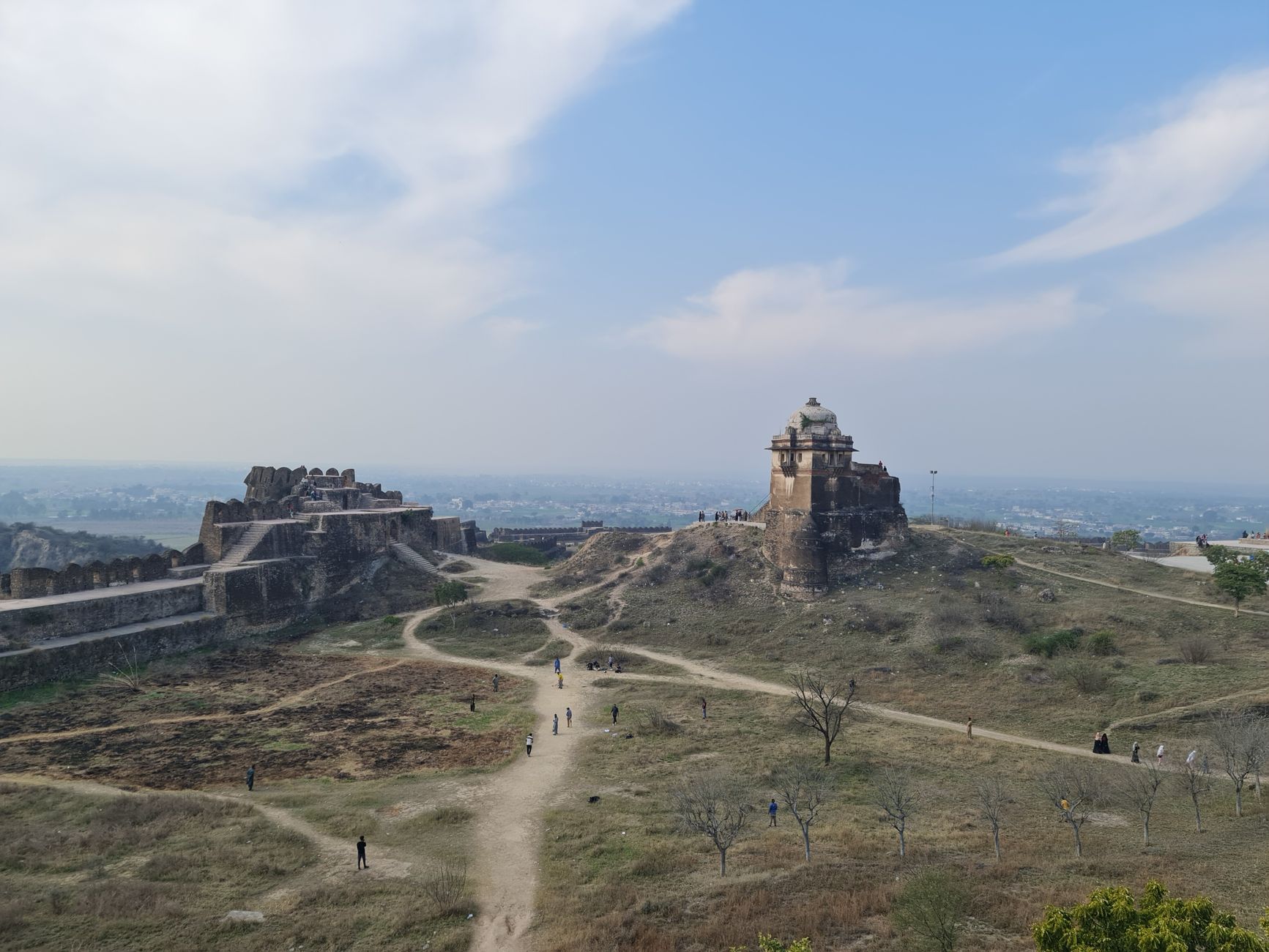
Near Jhelum stands Rohtas Fort, a colossal 16th-century garrison built by the Afghan ruler Sher Shah Suri to crush the local Gakhars and hold the road to Kabul. A UNESCO World Heritage Site, it has four kilometres of walls, 68 bastions and monumental gates like the Sohail Gate, all still standing among a village that grew up inside the ramparts. It never fell in battle, and walking its walls you can see why.
Khewra Salt Mine
Deep in the range near Pind Dadan Khan is the Khewra Salt Mine, the second largest in the world and the source of much of that famous pink Himalayan salt. Salt has been dug here for well over a thousand years, and legend ties its discovery to the horses of Alexander's army. A little electric train carries you deep inside to glowing pink chambers, salt-brick bridges over green brine pools, and a small mosque built entirely of salt. It is genuinely magical, and a hit with kids.
Katas Raj Temples
Near Choa Saidan Shah, the Katas Raj Temples cluster around a sacred green pond that Hindu tradition says formed from the tears of Shiva. Some of the temples are more than a thousand years old, and the site remains an important place of pilgrimage, drawing yatris especially around Maha Shivratri. It is a peaceful, atmospheric spot layered with Hindu, Buddhist and Mughal history.
Kallar Kahar and Takht-e-Babri
The town of Kallar Kahar sits around a saltwater lake and is the gateway to the Soon Valley. Above it, the Takht-e-Babri is a stone platform where the Mughal emperor Babur is said to have addressed his army in 1519, described in his own memoirs, the Baburnama. There are peacocks, orchards and a well-known lakeside stop right off the motorway.
The Soon Valley
Deeper into the range lies the green, little-known Soon Valley, a fertile bowl of fields and orchards ringed by hills. Its jewels are two lakes, Khabikki and the larger, saline Uchhali, which draw thousands of migratory birds in winter, including flamingos. It is one of the most surprising and untouched corners of Punjab.
When to go and how to plan it
Come in spring (February to April) when the plateau is green, or in autumn (October to November), and skip the harsh summer. The beauty of this region is how easy it is: everything is a short detour off the M-2 motorway, so you can pick off Rohtas, Khewra, Katas Raj and Kallar Kahar on day trips from Islamabad or Lahore, or string them into a relaxed two to three day loop with a night in the Soon Valley.
Where to stay
Most people day-trip from Islamabad (about two hours) or Lahore (about three). If you want to linger, Kallar Kahar has motels and rest houses right by the motorway, the Soon Valley has a handful of simple guesthouses, and there are decent hotels in Jhelum and Chakwal.
Quick answers
How far is it from Islamabad? Rohtas and Khewra are roughly two hours down the M-2 motorway, so it is an easy day trip.
Do you need a permit? No, just small entry fees at the main sites.
Is Khewra good for families? Yes, the mine train and salt caverns are a big hit with children.
How many days? One long day for Rohtas and Khewra, or two to three to add Katas Raj and the Soon Valley.
Written and fact-checked by the Pakistan Locals editorial team, with local guides across the Potohar region. Last updated August 2026. Entry fees and timings change, so confirm before you set off.
Sources and further reading
- The Salt Range and Khewra Salt Mine, UNESCO World Heritage Centre
- Rohtas Fort (UNESCO World Heritage Site)
- Khewra Salt Mine
- Katas Raj Temples
- Soon Valley
Plan a Potohar road trip with local hosts on Pakistan Locals, or host travellers in your area. See more heritage in our Lahore city guide.
Questions people ask
Where are the Salt Range and Potohar Plateau?+
They lie in northern Punjab between the Jhelum and Indus rivers, straddling the M-2 motorway, an easy 2 to 3 hour drive from either Islamabad or Lahore.
Is the Khewra Salt Mine worth visiting?+
Yes. It is the second largest salt mine in the world, with a little train that carries you into pink-lit caverns, salt sculptures and an underground mosque made of salt bricks.
Can you visit Katas Raj?+
Yes. The ancient Hindu temple complex around its sacred pond is open to visitors and is an important pilgrimage site, especially during Maha Shivratri.
Do you need a permit?+
No. These sites are all freely open, with small entry fees at Rohtas, Khewra and Katas Raj.
Pakistan Locals Team
The Pakistan Locals editorial team writes practical, on-the-ground travel guides to Pakistan, researched and fact-checked in consultation with our network of local hosts and guides.