Kaghan Valley Travel Guide: Every Stop From Balakot to Babusar

Pakistan Locals Team
15 August 2026 · 4 min read
At a glance
- Location
- Naran
- Region
- Khyber Pakhtunkhwa
- Best time
- June to September, with Babusar Top open roughly July to September
- Duration
- 3 to 5 days
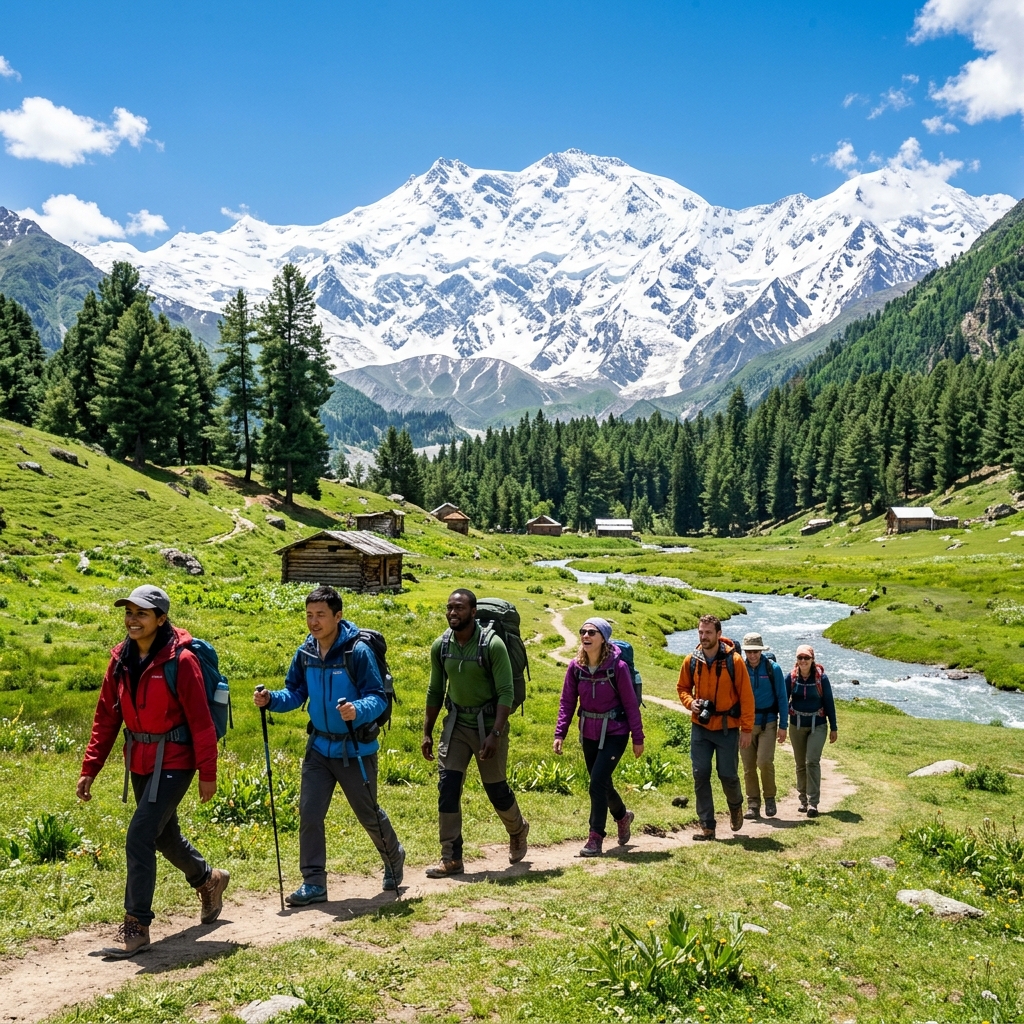
Most people say Naran when they mean Kaghan. The Kaghan Valley is the whole show: 155 kilometres of the Kunhar River climbing from Balakot at under 1,000 metres to Babusar Top at 4,173, with pine forest, plateau meadows, glacial lakes and one very famous fairy tale lake along the way. If you only chase Naran bazaar you drive past half of it. This guide runs the valley bottom to top, so you can decide where your days are best spent.
The quick answer
Enter at Balakot, 6 to 8 hours from Islamabad via the Hazara Motorway and the N-15. Sleep at Shogran or Naran. The essential stops in order are Shogran and Siri Paye, Sharan forest, Naran with Lake Saif-ul-Malook, then Lulusar Lake and Babusar Top when the pass is open, roughly July to September. Three to five days does it properly. See the full Islamabad to Naran route guide for the drive itself.
Balakot: the gateway
Rebuilt after the 2005 earthquake, Balakot is where the valley begins and where you should fuel the car and the passengers. Beyond here the road follows the Kunhar the whole way, and the river never really leaves your window again. It is a place to pass through rather than stay, but the trout lunch spots on the river are a fair first stop.
Shogran and Siri Paye
Half an hour past Balakot, the village of Kiwai marks the turn for Shogran, a plateau at about 2,360 metres with hotels among the pines. From Shogran, local jeeps climb the rough track to Siri Paye, a green meadow bowl near 3,000 metres that spends half its life inside a cloud, and is somehow better that way. Expect the jeep to cost a few thousand rupees per vehicle, negotiated at the stand. Shogran makes a calmer overnight base than Naran if crowds are not your thing.
Sharan: the forest almost nobody visits
Back on the main road, the village of Paras is the turn for Sharan, one of the finest moist temperate forests left in the country, reached by its own jeep track. There are forest huts and camping pods inside the trees and a three to four hour walk up to Manshi Top for the view. It is the quietest good place in the whole valley. We cover it fully in our Sharan forest guide.
Naran and Lake Saif-ul-Malook
Naran, at about 2,400 metres, is the valley capital: hotels, food street, trout, and the jeep stands. The one non-negotiable is Lake Saif-ul-Malook at 3,224 metres under Malika Parbat, reached by a 40 minute jeep ride. Go at first light, before the day trippers, when the water is still and Malika Parbat sits reflected in it. Boats work the lake, and the fit can continue on foot toward Ansoo Lake in high summer, a genuinely hard day that needs a guide. Everything about the town side of this is in our Naran and Saif-ul-Malook guide, and hotel strategy lives on the Naran Kaghan destination page.
Batakundi to Besal: the high valley
Above Naran the crowds thin fast. Batakundi has newer hotels and colder nights. Burawai and then Besal are the trailheads for the high country, including the three day Dudipatsar Lake trek, a bowl of impossible blue at 3,800 metres that rewards every step, July to September only. Even if you trek nothing, the drive itself keeps improving.
Lulusar Lake and Babusar Top
Lulusar, the long lake the Kunhar rises from, sits right beside the road and needs no effort at all: stop, walk the shore, move on. From there the switchbacks climb to Babusar Top at 4,173 metres, the head of the valley and the summer door to Chilas and the Karakoram Highway. It is cold up there in August and snowbound by October. If the pass is open, cresting it is the natural finale of a Kaghan trip, and the reason many travellers continue north to Hunza or Skardu rather than turning back.
When to go
June to September is the real season. May can still have snow above Naran, and by late October the upper valley closes. July and August are green, busy and expensive at weekends. June and September give you the same valley with room to breathe. Winter belongs to Shogran, which stays reachable when everything higher shuts.
What it costs
Guesthouse doubles run roughly PKR 4,000 to 12,000 and peak season hotels in Naran considerably more. Jeeps are per vehicle: a few thousand for Siri Paye, more for Saif-ul-Malook, negotiated at the stand. Trout dinner, boat rides and Babusar fuel round out a budget that stays modest by northern standards if you avoid the peak weekends. Full cost tables are on the destination page.
Planning the trip? Start with the Islamabad to Naran route, browse Naran Kaghan trips with local hosts, or see the full northern Pakistan itinerary. Run trips in the valley yourself? List them free.
Questions people ask
Where is the Kaghan Valley?+
In the Mansehra district of Khyber Pakhtunkhwa, running about 155 km from Balakot up the Kunhar River to Babusar Top at 4,173 m. Naran, its main tourist town, is roughly 260 km from Islamabad.
What is the difference between Kaghan and Naran?+
Kaghan is the whole valley and also a small town in its middle. Naran is the bigger tourist hub 25 km further up, with most of the hotels and the jeep stands for Lake Saif-ul-Malook.
When is the Kaghan Valley open?+
The road to Naran generally runs May to October. Babusar Top at the head of the valley opens around July and closes by late September. In winter, snow shuts everything beyond Kaghan town.
What are the main places to visit in Kaghan Valley?+
Shogran and Siri Paye, Sharan forest, Naran and Lake Saif-ul-Malook, Lulusar Lake, Dudipatsar Lake for trekkers, and Babusar Top. Balakot is the gateway town at the bottom.
How many days do you need for Kaghan?+
Three days covers Shogran, Naran and Saif-ul-Malook at a sane pace. Five lets you add Babusar, Lulusar and a quieter corner like Sharan without rushing.
Pakistan Locals Team
The Pakistan Locals editorial team writes practical, on-the-ground travel guides to Pakistan, researched and fact-checked in consultation with our network of local hosts and guides.