Mushkpuri Top Trek: The Galiyat’s Best Half Day

Pakistan Locals Team
15 August 2026 · 2 min read
At a glance
- Location
- Murree
- Region
- Punjab
- Best time
- April to June and September to October; a careful snow hike in winter
- Duration
- Half a day
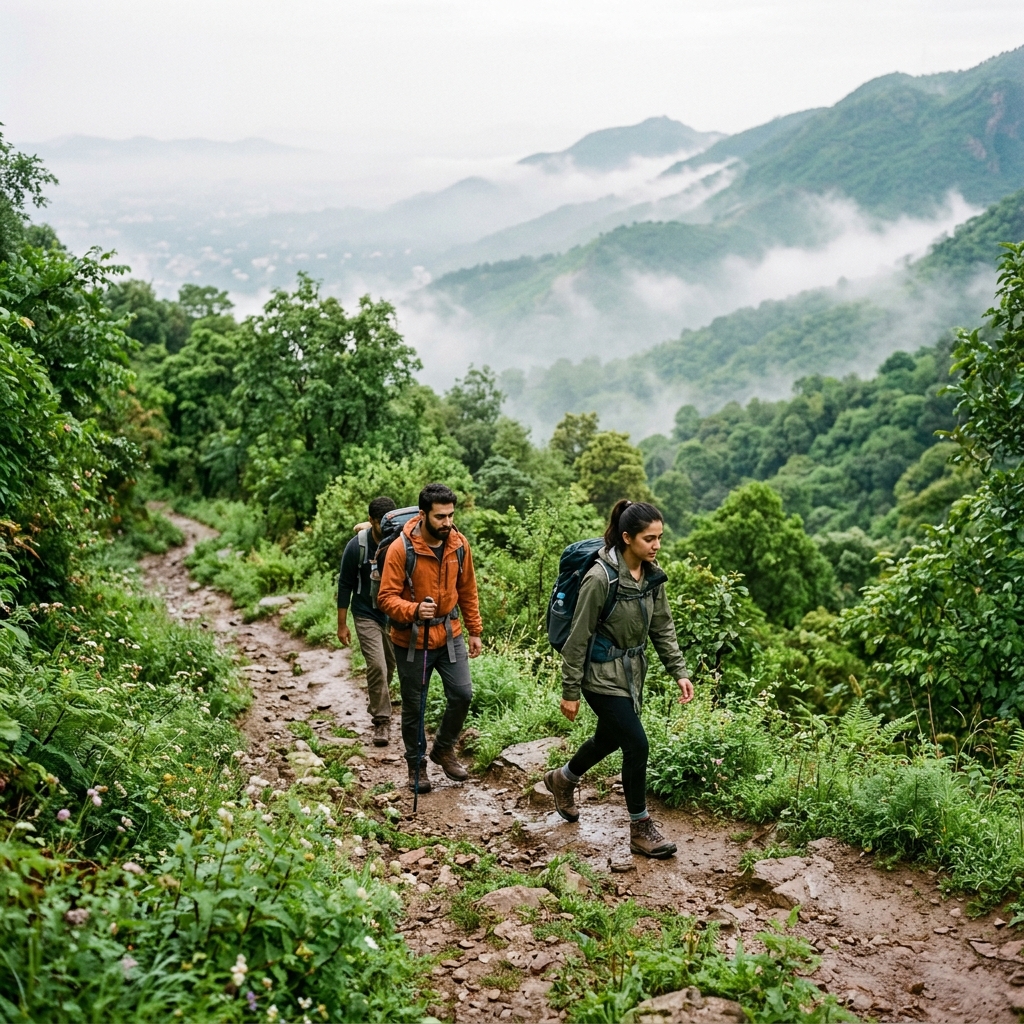
Ask hikers around Islamabad for the best effort to reward walk within a morning of the city and the answer keeps landing on the same green summit. Mushkpuri Top, at roughly 2,800 metres above Nathia Gali, is the Galiyat done right: a real climb through real forest to a meadow top with the Kashmir hills rolling away on one side and, on a clear day, the haze of Islamabad far below on the other.
The quick answer
Start from Dunga Gali or Nathia Gali, about 2.5 hours from Islamabad past Murree. Two to three hours up, less down, on a clear well walked trail. April to June and September to October are the best months. Carry water, wear real shoes, and keep a warm layer for the top even in summer.
The two routes up
The Dunga Gali trail is the connoisseur choice: it climbs steadily through thick pine and fir, shaded most of the way, joining the ridge before the final meadows. The Nathia Gali trail, starting near the town, is steeper and more direct, trading shade for speed. A good plan is up from Dunga Gali and down to Nathia Gali, with a car or a cup of tea arranged at the far end. Neither route needs a guide in fair weather; both punish flip flops.
The summit
The top is an open grass dome, not a rocky peak, which is exactly what makes it so good: room to sit, eat, nap and stare. Northward the ridges stack toward Kashmir, and Miranjani, the Galiyat's highest point, stands across the gap daring you to come back for it. Weekend mornings see a steady stream of hikers; weekday dawns you may have the whole meadow to yourself, along with the monkeys, who know exactly what is in your bag.
Seasons and the winter version
Spring brings wildflowers to the meadows, early summer is green perfection, and monsoon turns the trail into a slippery, leech friendly adventure with clouds instead of views. Autumn is the photographer's window: sharp air, long light. In winter Mushkpuri goes under snow and the walk becomes a proper snow hike, popular with prepared local groups. It is beautiful, and it is not the day for casual shoes or a late start. Check conditions in Nathia Gali before committing.
Building it into a trip
Mushkpuri is the anchor of the ideal Galiyat weekend: sleep in Nathia Gali, walk the Ayubia pipeline track the first afternoon, summit Mushkpuri the next morning, and be back in Islamabad for dinner. The full Murree and Galiyat picture, including where to stay and how to dodge the traffic, is on the destination page, and the drive itself is covered in the Islamabad to Murree route guide.
Prefer company on the trail? Browse guided hikes with local hosts, or if you guide the Galiyat yourself, list your treks free.
Questions people ask
How high is Mushkpuri Top?+
About 2,800 metres, making it the second highest point in the Galiyat after Miranjani. The summit is an open meadow with views across the Kashmir hills and down toward Islamabad on clear days.
How long is the Mushkpuri trek?+
Two to three hours up and less coming down, from either trailhead. The Dunga Gali side is the gentler, more shaded route; the Nathia Gali side is steeper and more direct.
Is Mushkpuri Top difficult?+
No. It is a well walked trail that fit beginners and families with older children manage comfortably in season. Good shoes, water and a warm layer for the summit are the only requirements.
Can you trek Mushkpuri in winter?+
Yes, and the snow version is beautiful, but it is a proper winter hike: cold, slippery and best done with a group, proper footwear and an early start. Check conditions in Nathia Gali before setting off.
Mushkpuri or Miranjani, which is better?+
Mushkpuri is shorter, easier and better for most visitors. Miranjani is higher and longer with bigger views toward Nanga Parbat on exceptional days. Doing Mushkpuri first is the sensible order.
Pakistan Locals Team
The Pakistan Locals editorial team writes practical, on-the-ground travel guides to Pakistan, researched and fact-checked in consultation with our network of local hosts and guides.